


🥛The Origin of Kefir
Milk kefir is a fermented beverage native to the Caucasus, a mountainous and desert region of Eastern Europe extending from the Black Sea to the Caspian Sea.
Kefir was discovered by chance by nomads who were transporting sheep, goat, and camel milk. During a long journey, they noticed that the milk, stored in leather bags, had turned into a thick, slightly fizzy beverage. They had just discovered milk kefir.
This kefir formed at the bottom of the leather bags: the natural presence of a multitude of yeasts and bacteria allowed the milk to ferment.
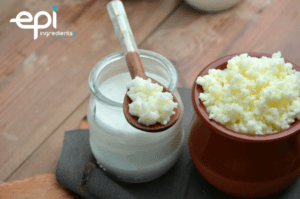
Today, milk kefir is produced using kefir grains. These grains are a cluster of living microorganisms that facilitate the fermentation of milk, thereby producing milk kefir.
Kefir grains form a cluster of living microorganisms that:
- On the one hand, cause the coagulation of casein (milk protein),
- On the other hand, convert lactose (milk sugar) into lactic acid, carbon dioxide, and alcohol.
✨Desired Properties and Effects
Kefir is a versatile ingredient, appreciated as much for its properties as for its slightly sour taste.
- Balance of intestinal flora :
Kefir is often appreciated for its natural fermentation, which produces a variety of microorganisms typical of fermented products. It is believed that these fermentation processes may contribute to the proper functioning of the digestive system.
- Overall and digestive well-being :
Digestive balance can be linked to a general well-being and the body’s proper functioning.
- Antimicrobial action :
Lactic acid fermentation (such as that involving the lactobacillus bacteria) is known to produce organic acids and other compounds that can limit the growth of undesirable microorganisms in food.
💡 Food Applications of Kefir Powder
The versatile properties of kefir powder make it suitable for use in a wide range of recipes, such as:
🍹 1. Fermented beverages
- Creamy smoothies,
- Flavored beverages (ginger, fruit, herbs)…
🍨 2. Dairy products and alternatives
- Fermented fresh cheeses,
- Fermented creams (sour cream-style),
- Plant-based versions (almond, coconut, oat milk)…
🍞 3. Baked goods and pastries
- Pancakes, waffles, breads, and brioche,
- Kefir sourdough (milder than traditional sourdough),
- Pastries…
🍫 4. Snacks and sweets
- Energy bars,
- Kefir-flavored chocolates or ganaches,
- Ice cream and sorbets…
🌿 5. Natural dietary supplements
- Mixes for smoothies or juices,
- Add-ins for high-fiber food…